

The New Geography of Everyday Life
Updated: Aug 31
Three quiet but powerful forces are reshaping how people relate to place:
1. Work is No Longer Tied to a Desk
Remote and hybrid work have permanently changed the rules. For many professionals, location has become flexible—sometimes fully, sometimes partially. This doesn’t mean people are moving permanently to the south, but it does mean they are creating alternative places to live, work, and reset.
2. Climate is No Longer a Luxury
Long winters, grey skies, and short daylight hours take a measurable toll on mental well-being and energy levels. Sunlight, outdoor living, and mild climates are not just “nice”—they directly affect mood, sleep quality, and focus. Southern Europe offers something Northern Europe simply can’t replicate: year-round outdoor life (with the small exception of those two months when Spain occasionally decides to audition for a role as a tropical rainforest!).
3. Space is Being Redefined
People are slowly shifting from “how many square meters do I own?” to “how good does my space feel?” Quality of light, connection to nature, quiet, views, air, walking paths, and outdoor life increasingly matter more than interior size. This is one of the reasons why compact living concepts—when designed well—are gaining traction.
Why Southern Europe Makes Sense (on Paper)
Southern Europe is not becoming attractive because it is romantic. It is becoming attractive because it makes sense:
Strong infrastructure (airports, roads, healthcare)
Relatively accessible real estate compared to Northern Europe
Mild climate → lower heating needs, more outdoor living
Cultural acceptance of slower rhythms, long lunches, social life
A growing ecosystem of international communities and remote workers
This combination makes regions like Southern Spain not just a holiday destination, but a functional extension of everyday life. Not a second home in the traditional sense. More like a second base.
Why This is Bigger Than Tourism
This shift is not driven by tourism boards. It’s driven by how people’s lives actually work now. The line between holiday, working remotely, recharging, and spending time away from the city is fading. People don’t just travel to escape their lives—they redesign their lives to include different environments for different needs.
Cities for speed, work, and stimulation
Nature for focus, calm, and recovery
The south for light, outdoor life, and breathing space
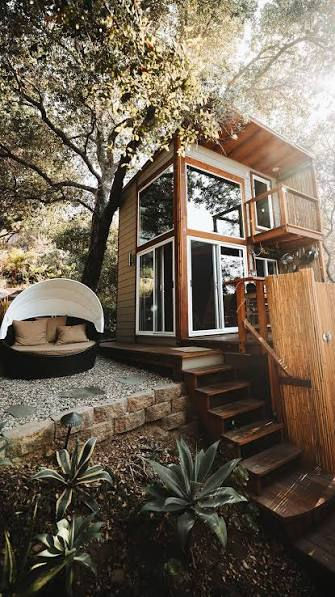
Tiny houses, modular units, and low-impact living concepts fit into this logic surprisingly well. They allow people to have a foothold in another environment without the weight, cost, and rigidity of traditional second homes.
Not a Rush South—A Smarter Distribution of Life
This is not about leaving Northern Europe behind. It’s about distributing life more intelligently across places. People are not running away from cities. They are simply no longer willing to live in one environment, under one rhythm, all year round. The south is becoming a complementary environment. A place to slow down, reset perspective, work differently, and reconnect with what feels simple and human.
Not paradise. Not escape. Just...a better balance.

A Vision for Sustainable Living
ARTS Eco Village™ is being developed within this wider shift—not as a promise of escape, but as a practical response to how people’s lives, work, and priorities are evolving. Design, flexibility, and nature are not marketing words here. They are functional tools for modern life.
In this serene environment, I find that every element is intentionally crafted to enhance my experience. The architecture embraces the landscape, allowing nature to flow seamlessly into my living space. I breathe in the fresh air, feeling the warmth of the sun on my skin. Here, I am reminded that life can be both luxurious and sustainable.
The community thrives on shared values. We gather for meals, exchanging stories and laughter. Each interaction deepens our connection to one another and the land we inhabit. This is not just a place to live; it is a sanctuary where I can nurture my spirit.
As I walk through the village, I notice the vibrant gardens bursting with life. They serve as a reminder of the beauty that surrounds us. I am inspired to cultivate my own small patch of earth, contributing to the collective effort of sustainability.
In this space, I embrace a lifestyle that prioritizes well-being and harmony with nature. I am part of a movement that seeks to redefine what it means to live well. The rhythm of life here is gentle, allowing me to pause and reflect.
As I look towards the future, I see endless possibilities. The journey is not just about finding a home; it is about discovering a way of life that resonates deeply within me. I am excited to be part of this evolving narrative, where luxury meets sustainability under the Andalusian sun.
Hein Arts, Marbella, February 2026


Comments