

WHY PEOPLE SECRETLY WANT TO ESCAPE CITIES

Let’s start with a small confession. Most people who live in cities say they love it. They love the buzz. The cafés. The culture. The convenience. The feeling that “everything is happening here”. And yet… If you ask them - honestly, late at night, after a long day - many will admit something else: they’re tired. Not tired in a “I need a holiday” way. Tired in a deep, background-noise kind of way.
Cities are brilliant. And exhausting.
Cities are great at one thing: stimulating your brain. Constantly. Sounds. People. Movement. Screens. Decisions. Micro-interruptions. Your brain evolved to notice movement in nature, not 300 notifications before lunch. So even when you’re “relaxing” in the city, your nervous system is still working overtime. This is not weakness. It’s biology.
Here’s the part people don’t usually post on LinkedIn: they crave:
- silence without feeling lonely
- space without feeling isolated
- nature without becoming a monk
- simplicity without giving up comfort
In short: they want to turn the volume down on life without disappearing from it. But saying “I want to escape the city” sounds dramatic. So people say: “I could use a weekend away.” “I’m thinking about working remotely more.” “I love the city, but…”
That “but” is doing a lot of work.
Why nature works so fast
You don’t need a PhD to feel it: your shoulders drop when you arrive somewhere quiet. Your breathing slows. Your thoughts stop racing. The nervous system switching modes. In natural environments:
*cortisol (stress hormone) drops
*focus improves
*sleep deepens
* creativity increases
It’s not that cities are bad. It’s that humans are not designed for permanent high stimulation. We need contrast!
The escape isn’t about running away
Here’s the misunderstanding: People don’t want to leave cities forever. They want an exit option. A place where:
- your phone still works
- Wi-Fi is still strong
- the coffee is still good
- but your brain can finally breathe
Not a cave or tent in the wilderness. Just… space.
A place where you can:
- work without constant noise
- think without constant interruption
- rest without guilt
The modern escape is strategic, not dramatic
Escaping cities today doesn’t look like quitting your job and buying goats. It looks like:
- remote working with a view
- weekends that actually reset you
- short stays that feel longer
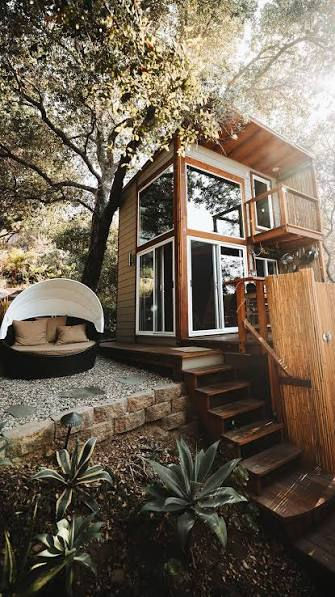
- owning or using a small place in nature
- designing life with on/off switches
The smartest people aren’t running away from cities.
They’re building a second setting for their nervous system.
Why small places in nature feel big
Here´s the paradox: a small space in the right environment feels bigger than a large space in the wrong one. Because space is not measured in m2. It’s measured in mental room. Quiet gives you mental room. Nature gives you mental room. Distance from noise gives you mental room.



Comments